


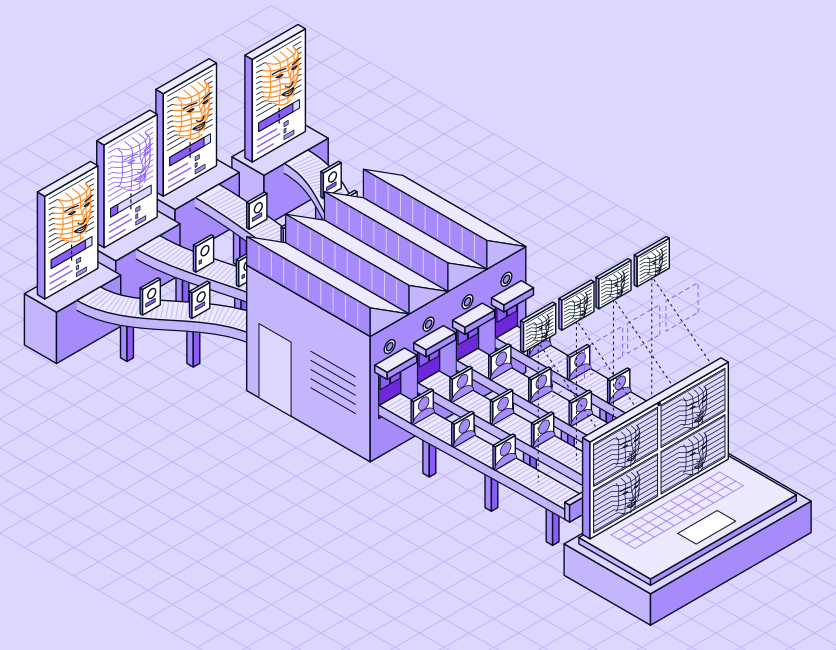
An AI avatar can talk back on a call. It still has to pass for a living face.
AI avatars now read scripts, answer questions, and join video calls with a face that never sat in front of a camera. Moveris reads one second of standard webcam video and decides whether a living face was in front of the camera. Use it on video calls, at the selfie step, and on recorded files.
What is AI avatar detection?
AI avatar detection decides whether the face in a video belongs to a living person or to an AI avatar. An AI avatar is a face made by AI that speaks on command, from a script or a chatbot. Some start from a few minutes of a real person's video. Others start from one photo or a stock face.
Two kinds of AI avatar
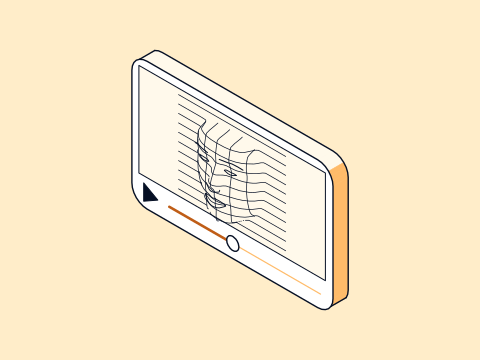
Scripted avatars
Type a script, and the tool returns a video of a face reading it. HeyGen, Synthesia, and D-ID make these from a stock face, a short recording, or one photo.
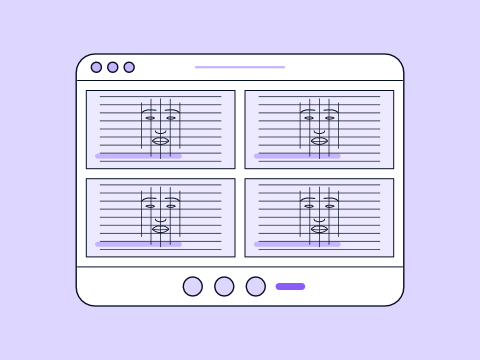
Conversational avatars
A chatbot writes the words, and the avatar draws a face that speaks them as the conversation runs. Tavus, HeyGen, Synthesia, and D-ID all sell avatars that talk back.
Tavus says its avatars join Google Meet, Zoom, and Microsoft Teams calls as participants. In its own study, nearly half of the people on a one-minute call with its newest model took it for a person.
Where AI avatars show up
Job interviews
A candidate sends an avatar to a remote interview to hide who is really applying.
Help desk and account recovery calls
An avatar built from an employee's photo asks for a password or second-factor reset.
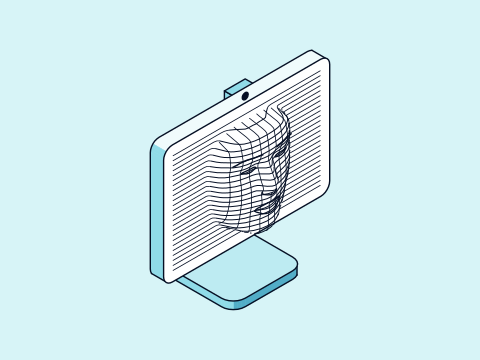
Selfie checks
An avatar built from the photo on a stolen ID is fed into onboarding or step-up through a virtual camera.
Video files
A recorded avatar reads a testimonial, a claim statement, or an investment pitch in a borrowed face.
In 2026, Gen Digital found the same avatar faces in scam video after scam video, and avatar makers for hire on freelance sites.
Why people miss an AI avatar
The newest avatars move, pause, and answer like a person. The whole face is drawn at once, so there is no edge around a swapped face to spot. In a small, compressed video window, a stiff moment looks like a bad connection. The chatbot behind the face handles small talk and follow-up questions. Deepfake tools get a new version every few days.
What an AI avatar has to copy
A brain and a body run a living face, so its blood flow, muscle movement, and emotion work together. We call that cognitive coherence. An avatar model draws every frame, and no brain or body runs that face. A deepfake can copy any one signal, but not how they all work together.
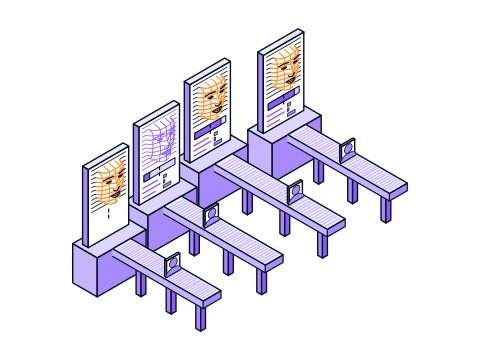
Moveris reads one second of video. It reads each of a hundred regions of the face four ways: facial muscle movement, blood flow, estimated depth, and neighbor contrast. Muscle movement goes down to the microexpressions that carry emotion. Moveris checks how all of those signs work together.

What your team gets back
Each check returns a decision, living face or not, and a human-likelihood score from 0 to 100. A breakdown shows what affected each score, so your fraud and review teams see more than the decision.
Built on our own data
Moveris is trained and tested on AI-generated video, along with face swaps, lip-sync, and injection attacks through a virtual camera. We generate, collect, and curate 90% of this data in-house, so it matches what happens in the real world.
Where to use it
MoverisLive
Checks for a living face on the webcam at onboarding, at step-up, and when an AI agent asks to act over MCP.
See MoverisLiveMoverisMeeting
Checks each participant on Zoom, Microsoft Teams, and Google Meet calls, and returns one decision for each.
See MoverisMeetingMoverisMedia
Checks the face in the video files people send you, and returns one decision per check.
See MoverisMediaAvatar tools by name
Tavus
AI video agents that see, hear, talk, and join Zoom, Google Meet, and Microsoft Teams calls.
HeyGen
Avatar video from a script, a two-minute recording, or one photo, plus LiveAvatar for conversations.
Synthesia
Avatar video for training and business, plus Sessions: back-and-forth conversations with an avatar.
D-ID
Digital humans from images or video, plus visual AI agents that talk with people face to face.
Hedra
Talking video from one image and an audio track with Character 3, plus dozens of hosted video models.
OmniHuman
ByteDance's model that turns one photo and a voice track into video of a person talking and moving.
Questions
Still have a question? Book a demo and ask us.
Is an AI avatar the same as a deepfake?
An AI avatar is a tool. It becomes a deepfake when someone passes it off as a real person, or puts words in a real person's mouth. A face swap changes a real person's face, while an avatar draws the whole face.
Can an AI avatar join a video call?
Yes. Tavus says its avatars join Google Meet, Zoom, and Microsoft Teams calls as participants. Any avatar on a screen can also reach a call through a virtual camera, which the app sees as a webcam.
How can you tell if someone on a call is an AI avatar?
Have software read the video, because the newest avatars move and answer like a person. A MoverisMeeting bot joins the call, reads each participant's video separately, and posts one decision for each to your webhook.
Can an AI avatar pass a selfie check?
It can pass a check that only looks for a face that moves, because avatars blink, turn, and speak on cue. Moveris is passive: your customer looks at the camera, and Moveris reads one second of video.
Does Moveris need to know which tool made the avatar?
No. Moveris checks for a living face, not for the marks of one tool. Whatever the next avatar tool is, it still has to copy a living face's cognitive coherence.
Does Moveris tell me whose face it is?
No. Moveris checks for a living face, and your ID check confirms who it is. Together, they put a real person behind each account.
Put a living face behind the next yes.
Tell us where you need a living-face decision. We will show you Moveris on your own flow.
