



A HeyGen avatar can say any script. It still has to pass for a living face.
HeyGen turns a script into a talking-face video: a stock avatar, a custom avatar from a short recording, or one photo. Moveris reads one second of standard webcam video and decides whether a living face was in front of the camera.
What HeyGen makes
HeyGen makes avatar video from a script. A customer picks a stock avatar, films two minutes of footage for a custom avatar, or starts from a single photo. HeyGen says its Avatar 6 model reproduces how a person looks, speaks, and moves from one photo.
LiveAvatar, announced in November 2025, streams an avatar that holds a conversation. Developers put it inside apps and web pages, with their own chatbot or with HeyGen's.
HeyGen's own safeguards
HeyGen holds back a custom avatar of a real person until that person films a consent statement on camera. Free exports carry a small HeyGen watermark.
Paid exports drop the watermark, and a file can be cut, cropped, and sent anywhere. The face is what is left to check.
Where an avatar video matters
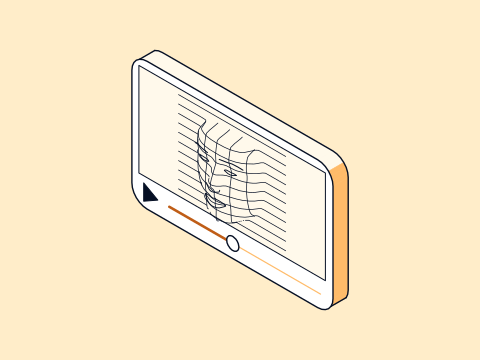
Video files
A claim video, a testimonial, or a recorded instruction shows a face that never sat in front of a camera.
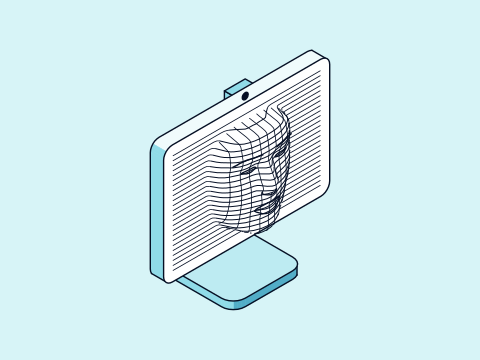
Selfie checks
A face made from one photo is fed into onboarding or step-up through a virtual camera.
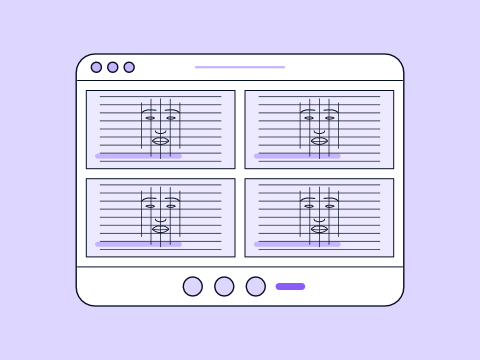
Video calls
An avatar playing on a screen reaches a Zoom, Teams, or Meet call through a virtual camera.
In September 2024, scammers posted a deepfake of HeyGen's own chief executive on YouTube, in a fake tutorial with phishing links.
What an avatar has to copy
A brain and a body run a living face, so its blood flow, muscle movement, and emotion work together. We call that cognitive coherence. An avatar model draws every frame, and no brain or body runs that face. A deepfake can copy any one signal, but not how they all work together.
Moveris reads one second of video. It reads each of a hundred regions of the face four ways: facial muscle movement, blood flow, estimated depth, and neighbor contrast. Muscle movement goes down to the microexpressions that carry emotion. Moveris checks how all of those signs work together.

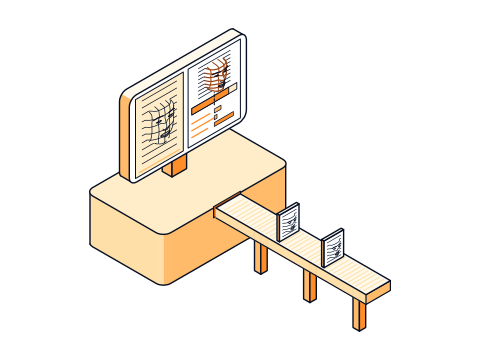
What your team gets back
Each check returns a decision, living face or not, and a human-likelihood score from 0 to 100. A breakdown shows what affected each score, so your fraud and review teams see more than the decision.
Built on our own data
Moveris is trained and tested on AI-generated video, along with face swaps, lip-sync, and injection attacks through a virtual camera. We generate, collect, and curate 90% of this data in-house, so it matches what happens in the real world.
MoverisLive
Checks for a living face on the webcam at onboarding, at step-up, and when an AI agent asks to act over MCP.
See MoverisLiveMoverisMeeting
Checks each participant on Zoom, Microsoft Teams, and Google Meet calls, and returns one decision for each.
See MoverisMeetingMoverisMedia
Checks the face in the video files people send you, and returns one decision per check.
See MoverisMediaQuestions
Still have a question? Book a demo and ask us.
What is HeyGen?
HeyGen is a company that makes AI avatar video. A customer types a script, and a stock or custom avatar says it on screen.
Is a HeyGen video a deepfake?
HeyGen defines a deepfake as synthetic media made to deceive. An avatar video made with consent and labeled as AI is not one. The same video passed off as a real person is.
Can HeyGen make an avatar from one photo?
Yes. HeyGen says its Avatar 6 model reproduces how a person looks, speaks, and moves from a single photo.
How can you tell if a video was made with HeyGen?
Free HeyGen exports carry a small watermark, but paid exports do not. Moveris checks the face itself: it reads one second of video and decides whether a living face was in front of the camera.
Can Moveris check a recorded video?
Yes. Upload the file to MoverisMedia, or send it through the MoverisMedia API. MoverisMedia reads the face one second at a time and returns one decision for each check, with a human-likelihood score from 0 to 100.
Does Moveris tell me whose face it is?
No. Moveris checks for a living face, and your ID check confirms who it is. Together, they put a real person behind each account.
Put a living face behind the next yes.
Tell us where you need a living-face decision. We will show you Moveris on your own flow.
HeyGen is a trademark of HeyGen Technology, Inc. We name it only to describe its products, and Moveris is not affiliated with HeyGen Technology, Inc.
