

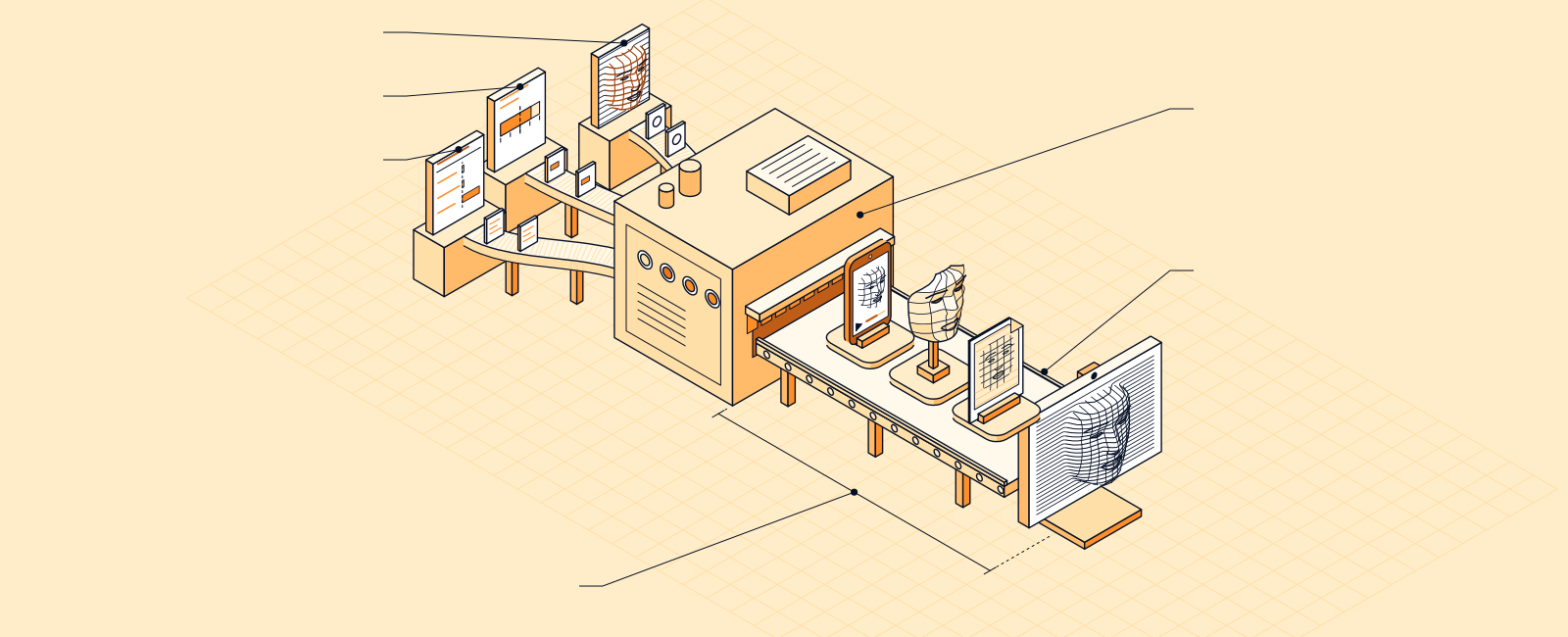

A presentation attack fools the camera. It is still not a living face.
Moveris reads one second of standard webcam video and decides whether a living face was in front of the camera. It is trained and tested on prints, masks, and screen replays.
What is a presentation attack?
A presentation attack puts a fake in front of a real camera. The camera works as it should, but what it sees is not a living person. The term comes from ISO/IEC 30107, the international standard for presentation attack detection, or PAD. You may also hear it called face spoofing.
The three kinds you will see

Printed photo
A photo of someone else, held to the lens.

Mask
A face cut from paper or molded from silicone, worn or held up.
Screen replay
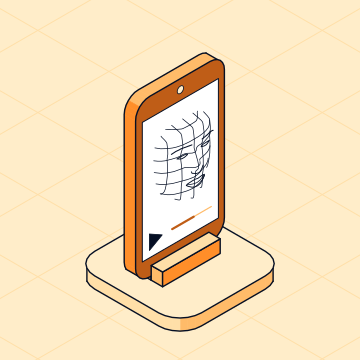
A phone or tablet playing a recording of someone's face.
Why presentation attacks still work
They are cheap. A printed photo costs almost nothing, and a recording of someone's face is often one public post away. A screen replay is the hardest of the three, because the recording can show a real person. The video was real. The person is not there.
What a presentation attack has to copy
A brain and a body run a living face, so its blood flow, muscle movement, and emotion work together. We call that cognitive coherence. A print has no blood flow. A mask has no microexpressions of its own. A screen replay shows a moment that is already over.
Moveris reads one second of video. It reads each of a hundred regions of the face four ways: facial muscle movement, blood flow, estimated depth, and neighbor contrast. Muscle movement goes down to the microexpressions that carry emotion. Moveris checks how all of those signs work together.

Built on attacks we record ourselves
We record our own screen replays, with phones and tablets held up to webcams. We generate, collect, and curate 90% of this data in-house, so it matches what happens in the real world.

What your team gets back
Each check returns a decision, living face or not, and a human-likelihood score from 0 to 100. A breakdown shows what affected each score, so your fraud and review teams see more than the decision.
Questions
Still have a question? Book a demo and ask us.
What is presentation attack detection (PAD)?
PAD is software that decides whether a face on camera is a living person or a fake shown to the camera. ISO/IEC 30107 sets the terms and the test methods.
Can a photo fool a face check?
A printed photo can fool a check that only looks for a face. Moveris is trained and tested on prints, masks, and screen replays.
What is the difference between active and passive liveness?
Active liveness asks the person to do something, such as blink or turn their head. Passive liveness asks for nothing. Moveris is passive: your customer looks at the camera, and Moveris reads one second of video.
What do APCER and BPCER mean?
They are the two error rates in ISO/IEC 30107-3. APCER is the share of attacks wrongly accepted. BPCER is the share of real people wrongly rejected. Book a demo to see Moveris on your own flow.
What is the difference between a presentation attack and an injection attack?
A presentation attack puts a fake in front of a real camera. An injection attack skips the camera and feeds in fake video. Moveris is trained and tested on both.
What camera does Moveris need?
A standard webcam or phone camera. No special hardware.
Further reading
Put a living face behind the next yes.
Tell us where you need a living-face decision. We will show you Moveris on your own flow.
