

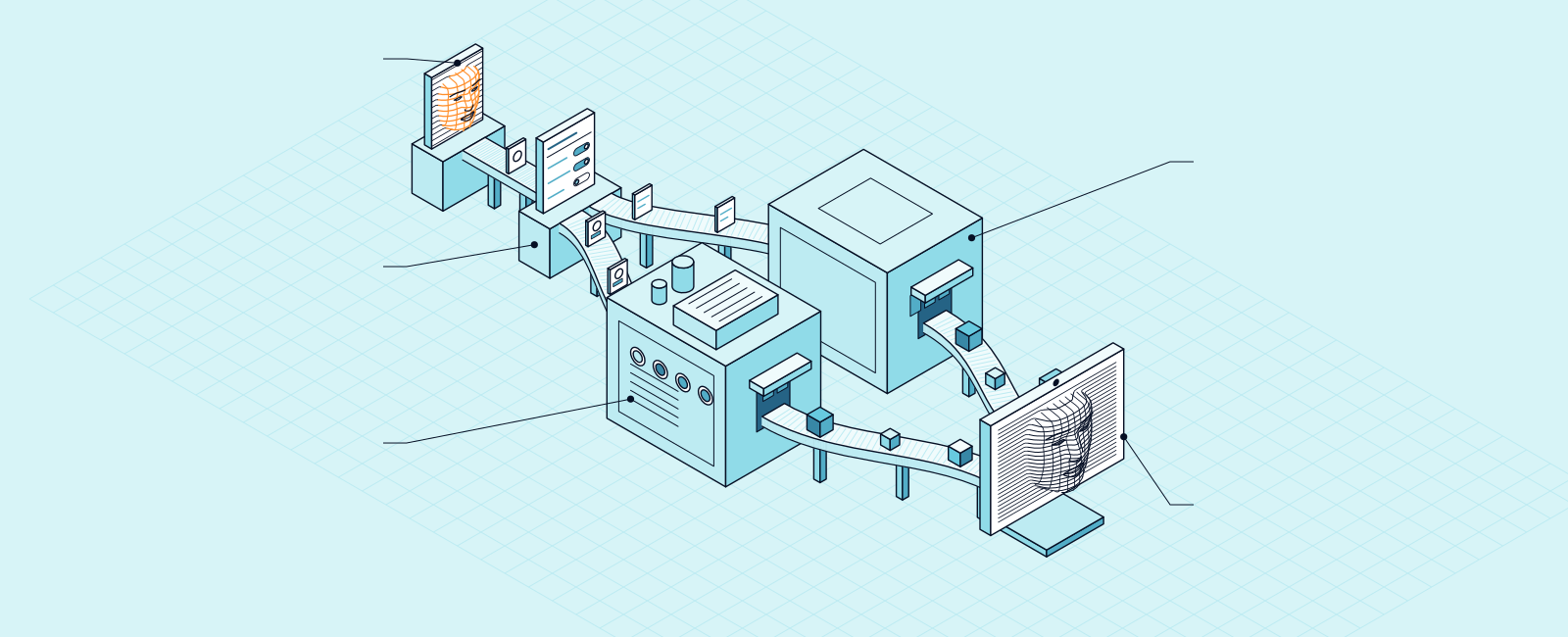
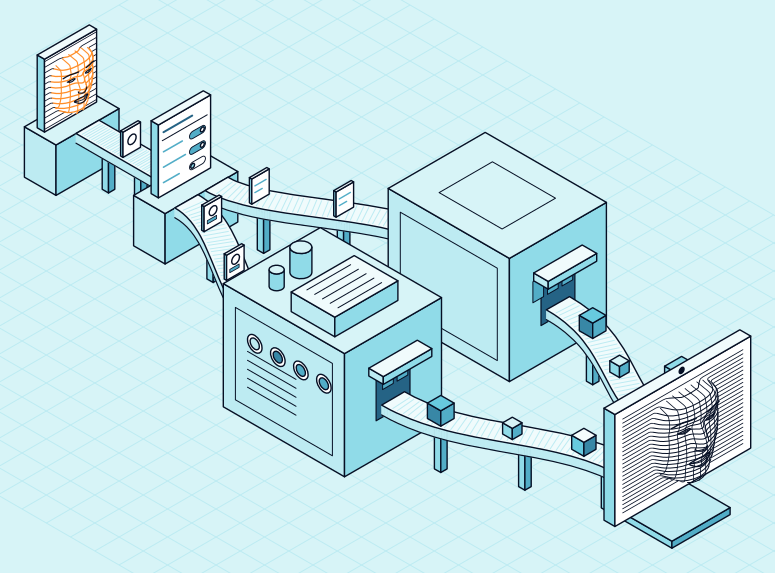
Keep HYPR. Add a check for a living face.
HYPR Affirm checks identity at onboarding, account recovery, and help desk calls, with document checks, face recognition that spots photos and masks, and a liveness-only check for lower-risk calls. Moveris adds a separate read of the living face: how blood flow, facial muscle movement, and emotion work together in one second of video. Your rules weigh both.[1][2]
Why teams add Moveris to HYPR
Help desk and interview calls
HYPR checks callers who ask to reset MFA, unlock an account, or change a phone number, and checks candidates across interview rounds. MoverisMeeting joins Zoom, Microsoft Teams, and Google Meet calls and posts a decision for each participant to your webhook.[2][3]
Two checks, different evidence
HYPR matches the face and spots spoofing with photos or masks. Moveris reads how blood flow, facial muscle movement, and emotion work together. An attack built to pass one still has to pass the other.[1]
A score with reasons
Each check returns a decision, living face or not, and a human-likelihood score from 0 to 100. A breakdown shows what affected the score.
Moveris and HYPR, side by side
| MoverisLive | HYPR | |
|---|---|---|
| What it checks | Signs of a living face in a hundred regions: facial muscle movement, blood flow, estimated depth, and neighbor contrast, and how they work together | Verification of passports, driver's licenses, and other official documents, and face recognition that spots photos or masks[1] |
| What the person does | Looks at the camera | Users get a URL and are guided through a series of screens that ask for identifying information[1] |
| Video it needs | One second of standard webcam video. No special hardware | A live video feed to confirm employee identity, and a video process for applicants[1][4] |
| Where it runs | Onboarding, step-up, and AI agent approvals over MCP | Help desk calls to reset MFA, unlock an account, or change a phone number; account recovery; and each stage of the interview process[1][2][3] |
| What you get back | A decision, living face or not, and a human-likelihood score from 0 to 100, with a breakdown of what affected it | Attestation results, with no sensitive personal data retained[1] |
| Attacks | Trained and tested on presentation attacks (prints, masks, screen replays), injection attacks, face swaps, lip-sync, and AI-generated video | Facial matching against impersonation, including deepfakes and photo-based fraud, and liveness-only checks and step-up verification against AI-generated impersonation[2][4] |
| Data and compliance | Complies with the GDPR and the CCPA. Certified to ISO 27001 for information security | Keeps the attestation results and no sensitive personal data[1] |
| How you add it | The Moveris SDK for React on the web or React Native on mobile, in the same onboarding flow | No-code flows set up in the Control Center, verification inside ATS and HCM systems, and an Okta connector[2][5][6] |
How Moveris reads a face
A brain and a body run a living face, so its blood flow, muscle movement, and emotion work together. We call that cognitive coherence. A deepfake can copy any one signal, but not how they all work together.
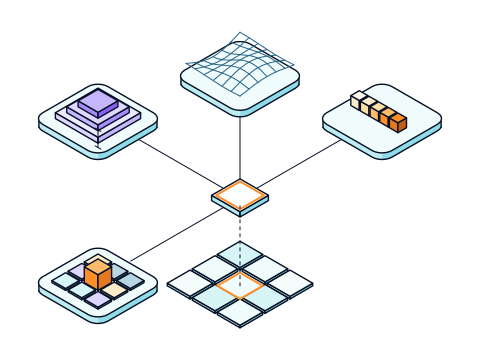
Moveris reads one second of video. It reads each of a hundred regions of the face four ways: facial muscle movement, blood flow, estimated depth, and neighbor contrast. Muscle movement goes down to the microexpressions that carry emotion. Moveris checks how all of those signs work together.
Each check returns a decision, living face or not, and a human-likelihood score from 0 to 100. A breakdown shows what affected each score, so your fraud and review teams see more than the decision.
Moveris is trained and tested on face swaps, lip-sync, AI-generated video, injection attacks, and presentation attacks. We generate, collect, and curate 90% of this data in-house, so it matches what happens in the real world.
Use Moveris with HYPR
Keep HYPR Affirm for document checks, face recognition, and its help desk and interview workflows. Add Moveris as a separate check: the Moveris SDK in the same onboarding flow, or MoverisMeeting on Zoom, Microsoft Teams, or Google Meet calls. Your rules weigh both results.[1][2]
Questions
Common questions about HYPR and Moveris.
Still have a question? Book a demo and ask us.
Can I use Moveris with HYPR?
Yes. Keep your HYPR flow and add Moveris as a separate check: the Moveris SDK in the same onboarding flow, or MoverisMeeting on help desk and interview calls. Your rules weigh both results.
How is Moveris different from HYPR?
HYPR Affirm combines document verification, face recognition that spots photos and masks, and liveness checks, and keeps the attestation results. Moveris reads one second of video across a hundred regions of the face: facial muscle movement, blood flow, estimated depth, and neighbor contrast. It returns a decision and a human-likelihood score from 0 to 100.[1]
Does HYPR verify callers on the help desk?
Yes. HYPR says its help desk verification covers callers who ask to reset MFA, unlock an account, or change a phone number. It offers a liveness-only check for lower-risk calls and step-up verification for high-risk requests. MoverisMeeting joins the call and checks each participant for a living face.[2]
Does HYPR check for deepfakes?
Yes. HYPR says facial matching spots impersonation attempts, including deepfakes and photo-based fraud. It says its liveness-only checks and step-up verification address AI-generated impersonation before access is granted. Moveris adds a read of how blood flow, facial muscle movement, and emotion work together in a living face.[2][4]
Can Moveris check video calls?
Yes. A Moveris bot joins Zoom, Microsoft Teams, and Google Meet calls and checks each participant for a living face.
How much video does Moveris need?
One second of standard webcam video. No special hardware.
Is Moveris GDPR and CCPA compliant?
Yes. Moveris complies with the GDPR and the CCPA, and it is certified to ISO 27001 for information security.
Further reading
Put a living face behind the next yes.
Tell us where you need a living-face decision. We will show you Moveris on your own flow.
Sources
- HYPR: https://www.hypr.com/platform/hypr-affirm-identity-verification. Checked 2026-11-22.
- HYPR: https://www.hypr.com/it-help-desk-identity-verification-hypr. Checked 2026-11-22.
- HYPR: https://www.hypr.com/solutions/workforce-identity-verification. Checked 2026-11-22.
- HYPR: https://www.hypr.com/solutions/candidate-verification-onboarding. Checked 2026-11-22.
- HYPR: https://www.hypr.com/integrations. Checked 2026-11-22.
- HYPR: https://docs.hypr.com/. Checked 2026-11-22.
HYPR is a trademark of HYPR Corp. We name it only to compare products, and Moveris is not affiliated with HYPR Corp.
Competitor facts come from each company's public pages as of 2026-11-22. See an error? Email contact@moveris.com.
