

Securing Finances: Misinformation, Fraud, and the Need for Biometric Verification in Financial Services
October 2026
Trust and truth are the bedrock of the financial system. Banks, insurers, and investment firms rely on accurate information to manage risk and serve customers – and customers need confidence that they’re dealing with legitimate institutions and honest communications. Yet in today’s digital economy, misinformation and fraud are seeping into the financial services realm, threatening that trust. From fake identities opening bank accounts to deepfake audio impersonating CEOs, the industry faces new challenges in verification and fraud prevention. This blog post examines how misinformation and fraudulent data impact financial services, why robust verification matters more than ever, and how a scientific, AI-driven approach can help fortify the sector against these emerging threats.
When Information (and Identities) Can’t Be Trusted
Synthetic Identities – A Growing Menace: One of the fastest-growing financial crimes is synthetic identity fraud, where criminals literally create new identities by combining real and fake personal data. For example, they might use a real Social Security number (often stolen from a child or deceased person) with a fake name and address to fabricate a “person” that doesn’t actually exist. They then use this synthetic identity to apply for credit cards, loans, or other financial products – essentially tricking banks into lending to a ghost. It’s misinformation at the identity level, and it’s costing the industry billions. According to the Federal Reserve’s secure payments experts, around 2015 synthetic fraud began skyrocketing. Estimates suggest losses jumped from about $8 billion in 2017 to over $20 billion a few years later, and as of 2023 have likely exceeded $30 billion annually [1]. In a span of five to six years, the problem roughly quadrupled [1], making synthetic IDs perhaps the largest source of credit card fraud in the U.S.
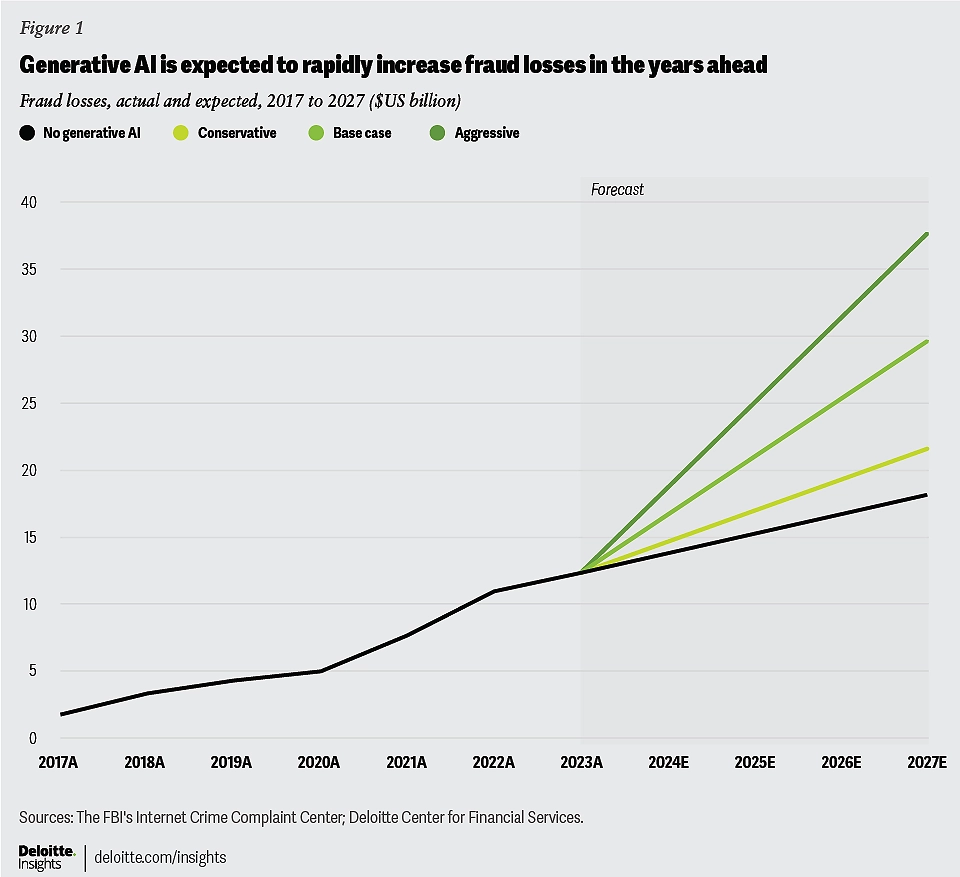
Deepfakes and Impersonation of Trusted Parties: Perhaps the scariest new threat is the use of AI-generated synthetic media to impersonate trusted parties in financial transactions. Picture this: A bank manager receives an urgent phone call from the “CEO” of a partner company instructing them to release a $1 million payment for a confidential acquisition. The voice on the phone sounds exactly like the CEO the manager has talked to before, so they proceed – only to find out later it was a deepfake AI voice, and the money went straight to criminals. This isn’t hypothetical; it already happened in 2019, when criminals reportedly used AI voice cloning to imitate a German parent company’s chief executive and talk the CEO of its UK energy firm into wiring about $243,000 [2]. In 2020, a bank manager in the UAE received a call that seemed to be from a company director he knew; it used a cloned voice and led to a fraudulent $35 million transfer [8]. These are not isolated stunts – they herald a trend. Deloitte estimates that generative AI-enabled fraud could drive $40 billion in losses by 2027 in the U.S. alone [3].
And the FBI has reported a rise in schemes where scammers use deepfake audio and video to pose as senior officials or business partners [4]. In one FBI warning, they noted malicious actors were sending deepfake voice messages of U.S. cabinet officials to targets, seeking to scam them.
Why is this happening? The verification processes that financial institutions rely on are under strain. KYC (Know Your Customer) procedures historically involve checking photo IDs, verifying personal information, sometimes biometric checks like a selfie match or fingerprints for high-security accounts. But AI can now generate extremely realistic fake IDs and synthetic identities. There are documented cases of fraudsters combining bits of real stolen data to create a “synthetic person” with a credit profile, then using that to pass credit checks and open accounts. Machine learning can generate a perfectly matching face image of the supposed ID holder, defeating simple selfie comparisons. A report found that in 2023, deepfake images and videos used for identity fraud increased dramatically – Sumsub (an identity verification firm) noted a 10x increase in detected deepfakes globally across industries, with the crypto sector being particularly hard-hit (88% of detected deepfake cases) [5].
Even the human element isn’t infallible: Studies have shown that humans trying to detect deepfake images perform barely above chance – on average only 62% accuracy for images, and only 24% for high-quality deepfake videos [5]. When bank staff or compliance officers are faced with forged or AI-faked documents and media, they might not catch them with the naked eye.
In summary, the financial sector is dealing with an arms race in fraud: As it deploys new defenses, fraudsters quickly find new ways (often with AI assistance) to break through, creating a pressing need for more advanced verification measures.
Why Verification is Mission-Critical in Finance
The examples above underscore a key point: verification – of identity, of information, of communications – is absolutely critical for financial services in the digital age. Unlike many industries, finance deals in promises and trust (a dollar or bitcoin only has value because we collectively trust it does, and a bank’s records are only as good as their fidelity). When false information seeps in, the consequences include:
- Direct financial losses: as seen with synthetic identity fraud or scams, institutions and customers can lose significant sums. The average loss per case of elder financial fraud (often via misinformation-fueled scams) for people 80+ is $1,750 – higher than any other age group [6]. And in synthetic fraud, one fake persona can cost a bank $15,000 on average in charged-off debt [7]. Multiply that by organized rings making thousands of synthetics, and the financial hit grows huge.
- Regulatory and compliance risks: Banks are required by law (KYC rules, anti-money laundering laws) to verify customer identity and report suspicious activity. If misinformation or deepfake documents allow illicit actors through, the bank could inadvertently facilitate money laundering or terrorist financing, bringing hefty fines and legal trouble. For instance, if a bank fails to detect that dozens of accounts were opened under fake identities to launder money, regulators won’t be lenient just because the IDs “looked real.” Verification failures can become compliance violations.
- Reputation damage: Trust is the currency of finance. A high-profile fraud incident – like news that a major bank got duped by a deepfake into wiring money – can erode public confidence. Similarly, if misinformation spreads unchecked (say, rumors of insolvency), a bank’s reputation can be harmed even if it’s fundamentally healthy. Financial firms need robust verification not only for internal safety but to reassure customers that their funds and data are secure.
- Operational inefficiencies: Without modern verification tools, financial institutions might resort to cumbersome manual checks to combat fraud – which slows down legitimate business. We’ve seen some lenders tighten up by requiring in-person ID verification or extra documentation, which frustrates good customers. Smarter verification (including AI-based solutions) can help distinguish fraudsters from genuine clients more efficiently, maintaining a smooth customer experience while catching the bad guys.
The Human Element: It’s worth noting that many financial frauds using misinformation exploit human psychology. Phishing emails push urgency (“Your account will be locked, act now!”). Scam calls prey on fear or greed. People assume they can tell real vs. “faked” videos. That’s why in addition to technical verification, employee training and customer education remain key. Bank staff have to be aware that a caller might not be who they claim, even if the voice is familiar – procedures like callback verification (calling the known number on file, not the one provided in the call) can thwart deepfake callers. Customers likewise benefit from guidance like: “We will never ask for your password or verification code via email.” Nonetheless, humans will make mistakes or be occasionally fooled, which underscores the need for extra layers of defense.
Raising the Shields: How AI and Science Enhance Verification
Given the high stakes, financial services are increasingly turning to advanced technologies to verify identities and detect fraudulent or false information. Among these, Artificial Intelligence (AI) and machine learning have emerged as game-changers.
Enhanced Identity Verification (IDV): Modern banks often use AI-powered document verification for onboarding. You scan your driver’s license and the system automatically checks holograms, fonts, and other security features to ensure it’s not a forgery. Companies like Onfido and Jumio (identity verification providers) use machine learning to compare the ID photo with a selfie you take, confirming liveness (that you’re a real person, not just a photo). But as mentioned, deepfakes and sophisticated fakes put pressure on these systems. This is where a platform like Moveris can provide an edge: our solution can analyze videos (live and recorded) with a forensic eye, spotting subtle inconsistencies based in biometrics.
Our scientific approach reads biological signals like blood flow and facial muscle movement, and how they work together, to assess the likelihood that the person on the other side of the screen is, indeed, real. Unlike a human, who might be fooled by a deepfake, our Moveris platform is trained on thousands of fake vs real videos and can parse out tiny details that humans gloss over.
The Science Advantage: The reason we emphasize a scientific approach is that finance is a heavily data-driven field – solutions need to be evidence-based and rigorously tested. Moveris’s team includes experts in data science and security, and we collaborate with academic researchers on the latest in biometric research - heck, we even ran the largest academic lab in this space for many years! This background ensures our platform isn’t just following hunches; it’s built and validated on real-world data and peer-reviewed techniques. Our methodology uses large datasets of both authentic and fake content to train our models. We continuously benchmark our detection accuracy and false positive rates, tweaking algorithms to be as precise as possible. In an industry where a false alarm can inconvenience a valued client and a missed fraud can cost millions, precision is paramount.
Building a Fortress of Trust
Financial institutions have long been at the forefront of security – think of the heavy vaults of old. Today’s vaults are digital, and the contents being protected include information and identities. To bolster these vaults, the industry must invest in cutting-edge verification and misinformation detection capabilities. The threats are evolving: synthetic identities, deepfake video – but so are the defenses.
At Moveris, we are contributing to these defenses with the MoverisLive platform, which offers financial organizations a powerful tool to authenticate identity. By integrating such technology, banks and financial firms can add an “AI-proof firewall” to their existing security stack – filtering out dubious customers with scientific rigor. The end result is not just fraud prevention, but also smoother customer interactions (since genuine customers pass through quickly while fraudsters hit roadblocks) and maintained trust.
For decision-makers in financial services: Now is the time to assess your verification processes. Are you still relying on manual document checks or outmoded ID systems that clever fraudsters can outwit? Consider augmenting them with AI-based solutions that have proven success in other domains. The Fed’s experts candidly noted that generative AI is like an accelerant for identity fraud [1] – but they also pointed out that “the best tool to stop thieves who use generative AI…is AI”. Embracing AI for defense can flip the script, using the same advanced tech for good.
For customers and consumers: Stay informed and vigilant. If your bank offers multi-factor authentication or biometric verification, use it – these extra steps can thwart impersonators. Be skeptical of unsolicited financial advice or requests on social media or email. When in doubt, contact your financial institution through known, official channels (not by hitting reply to a questionable message). Remember that a bank will verify you, but you have the right to verify them too if something seems off. And you can use MoverisMedia as well to check your social media or other videos to make sure they are on the up-and-up!
In summary, misinformation and fraud may be getting smarter, but so are our solutions. The financial services industry, armed with tools like MoverisLive and guided by a commitment to scientific verification, can continue to secure the trust that underpins all financial relationships. To learn more about how MoverisLive can reinforce your institution’s defenses and protect your clients, reach out to us or visit our platform’s page. In the quest to safeguard finance in the digital era, let’s ensure that truth and verified trust remain the gold standard.
Citations:
[1] Federal Reserve Bank of Boston (2023) – Synthetic identity fraud: How AI is changing the game.
[2] The Wall Street Journal (2019) – Fraudsters Used AI to Mimic CEO’s Voice in Unusual Cybercrime Case.
[3] Deloitte (2024), Generative AI is expected to magnify the risk of deepfakes and other fraud in banking.
[4] Federal Bureau of Investigation (2025) – Senior US Officials Impersonated in Malicious Messaging Campaign
[5] Eftsure (2025) – Deepfake Statistics (archived copy)
[6] Federal Trade Commission (2023) – FTC Issues Annual Report to Congress on Agency’s Actions to Protect Older Adults
[7] Global Compliance Institute (2024) – The Rise of the Synthetic Identity: A Growing Threat in the Digital Age (archived copy)
[8] Biometric Update (2021) – $35M stolen in voice clone as deepfake tech availability increases
Put a living face behind the next yes.
Tell us where you need a living-face decision. We will show you Moveris on your own flow.
